Designing how refunds are communicated
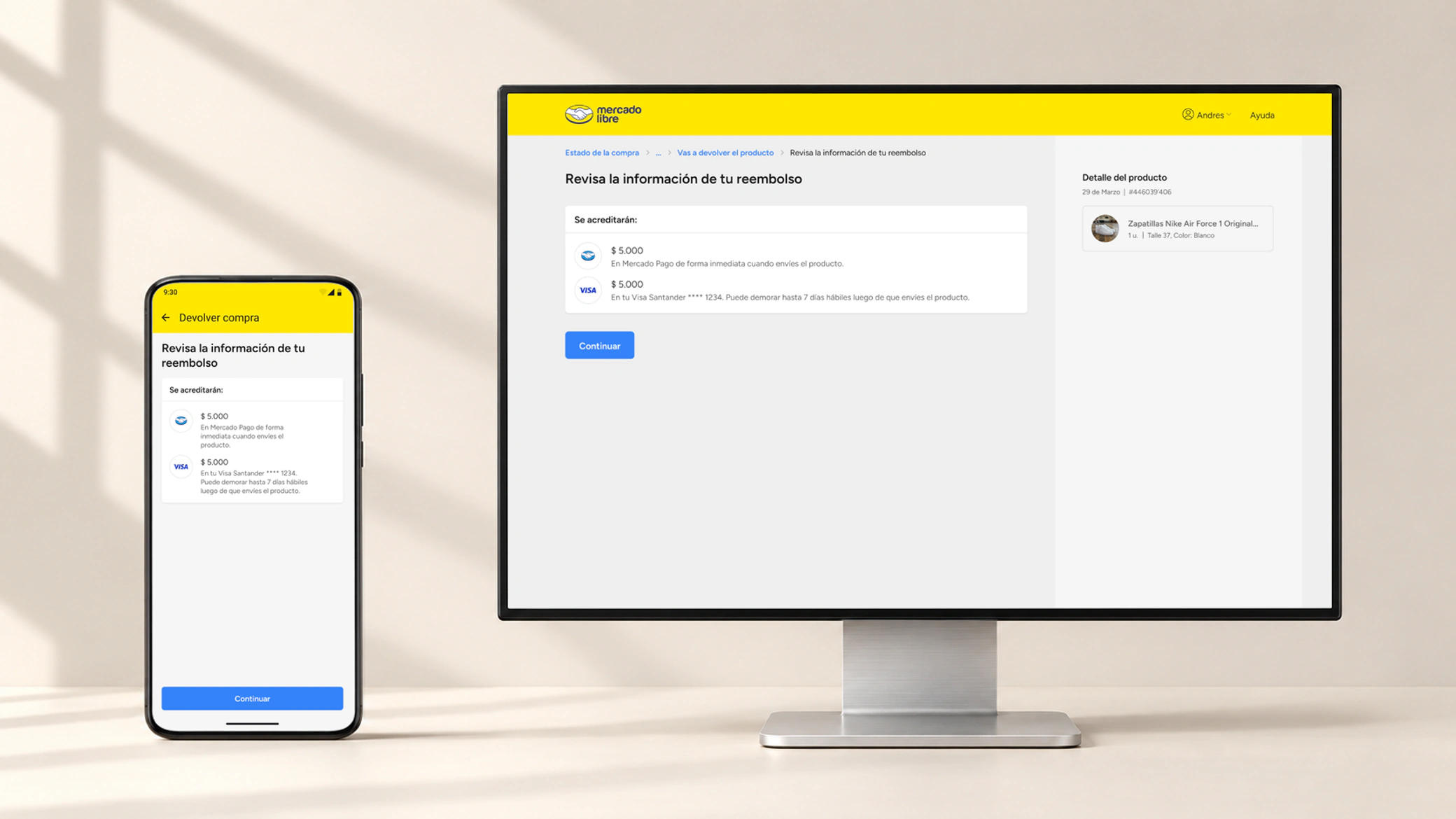
I designed a modular structure of interfaces and content to communicate how much money is returned, where it is credited, and what conditions determine when it becomes available.
01 · The challenge
Money could return to different payment methods at different times
The previous experience did not cover every combination of payment and return. Where the money would go, and under what conditions it would be credited, was not always clear, which led to questions and requests to customer support.
The information had to answer three questions: how much the person would receive on each payment method, where it would be credited, and what had to happen for it to become available.
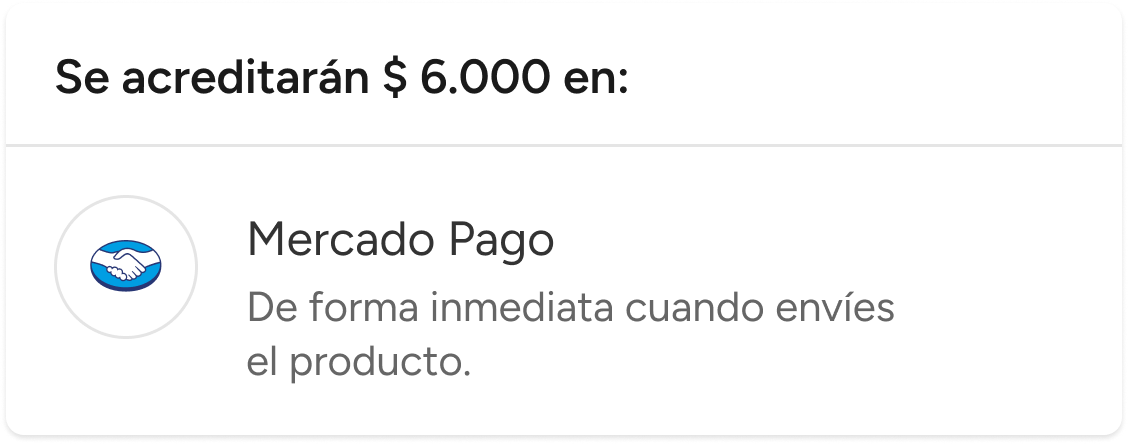
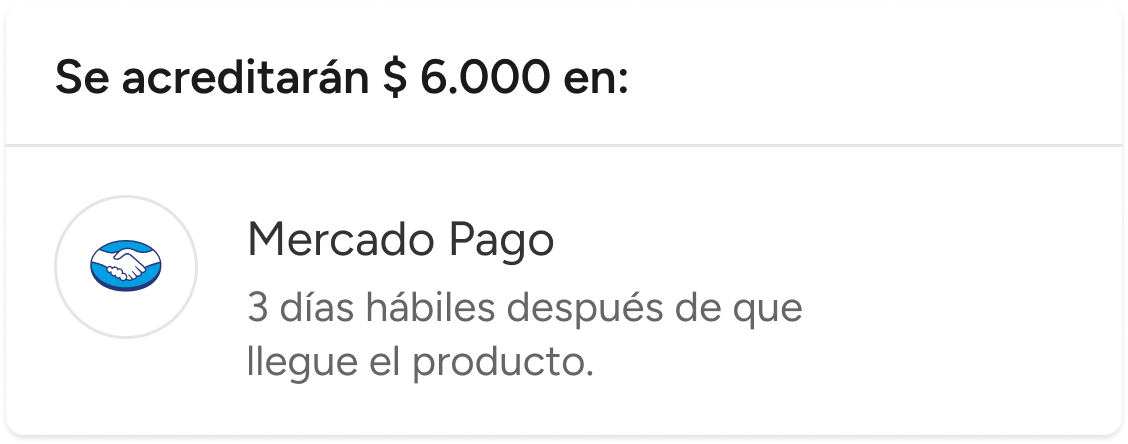
Stating a timeframe was not enough: the content also had to explain which event triggered the credit. The examples show one refund that is credited when the product is shipped and another that sets three business days after it arrives.
When the product is shipped
After the returned item arrives
02 · The solution
How much, where, and when, in one structure
I designed a card system that organizes amounts, destinations, and crediting conditions according to the payment methods used.
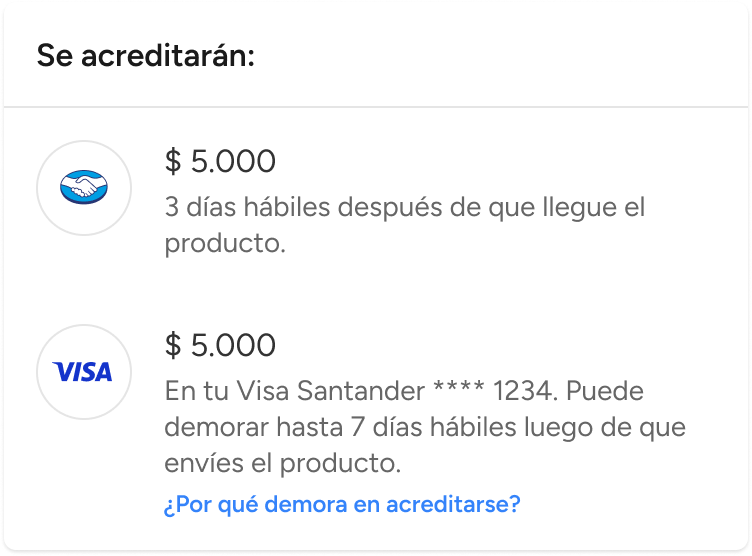
When a refund is split across several payment methods, each destination has its own information module. This makes it possible to check the amount and the condition that apply to each one.
Each destination, with its amount and its condition
The hierarchy adapts to the number of payment methods: in the single-destination example, the amount appears in the header; when there are two, each amount is shown within its module.
One payment method
Two payment methods
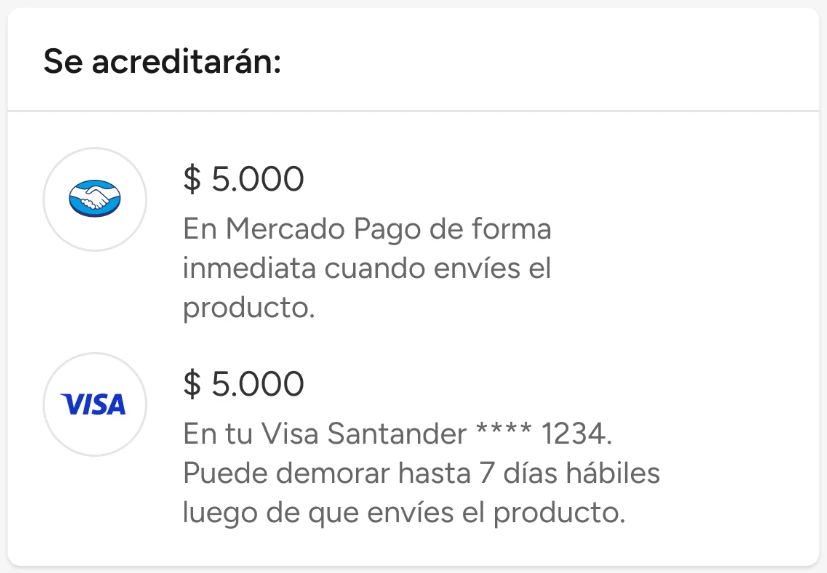
Separating the destinations makes it possible to communicate different conditions without one timeframe appearing to apply to the entire refund.
03 · Tracking
Refund updates remain available after arranging the return
Completing the return does not mean the money is already available. The purchase view keeps the refund status and the information needed to know what to expect visible.
In collaboration with UX Content and the team responsible for the purchase details experience, we defined and adapted the refund status messages on top of the product's existing templates.
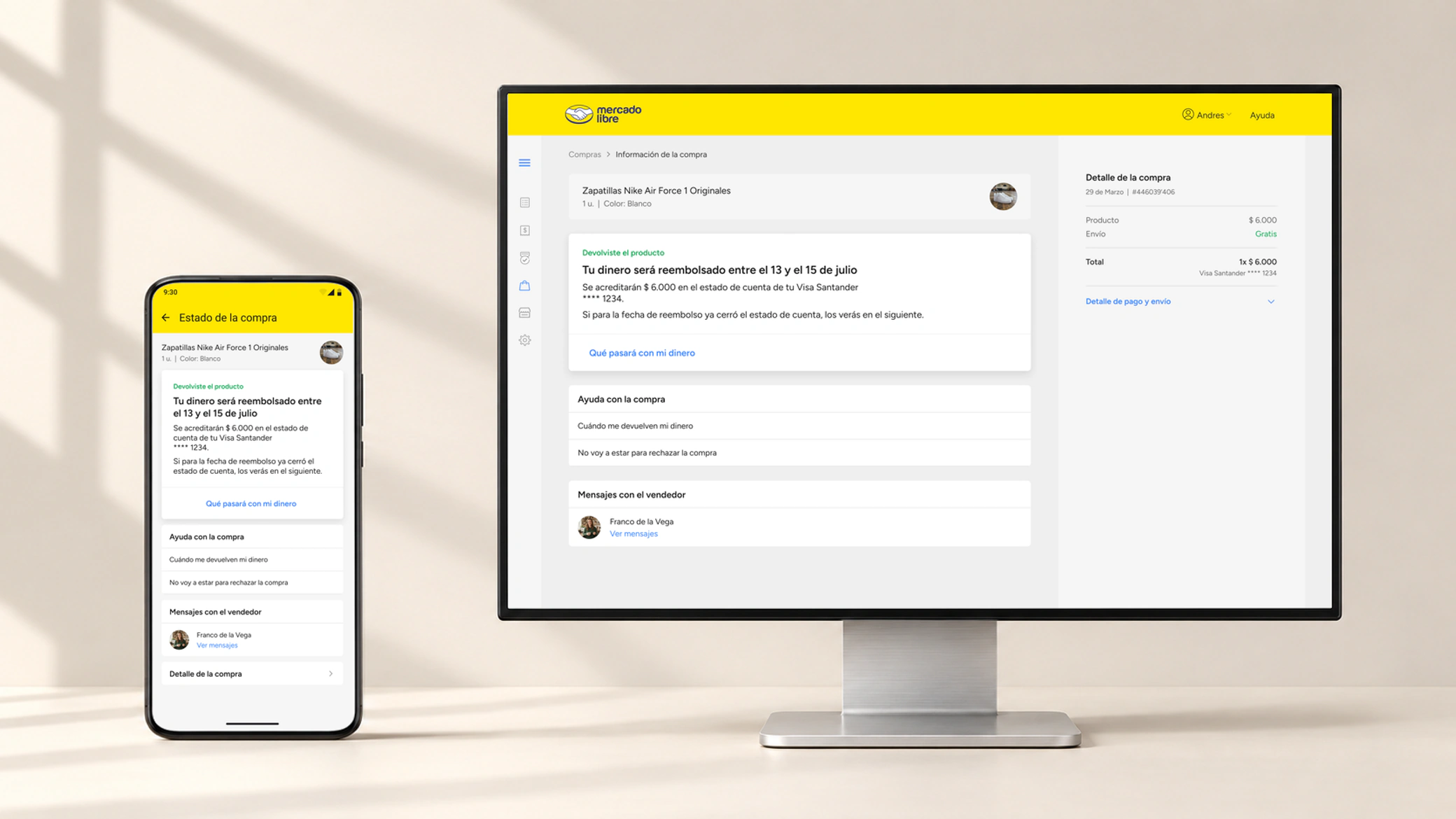
From knowing when it will arrive to knowing it is already available
While the refund is in progress, the purchase view shows the expected date and where it will appear. Once the money is available in Mercado Pago, it confirms the credit and offers access to check it.
In progress
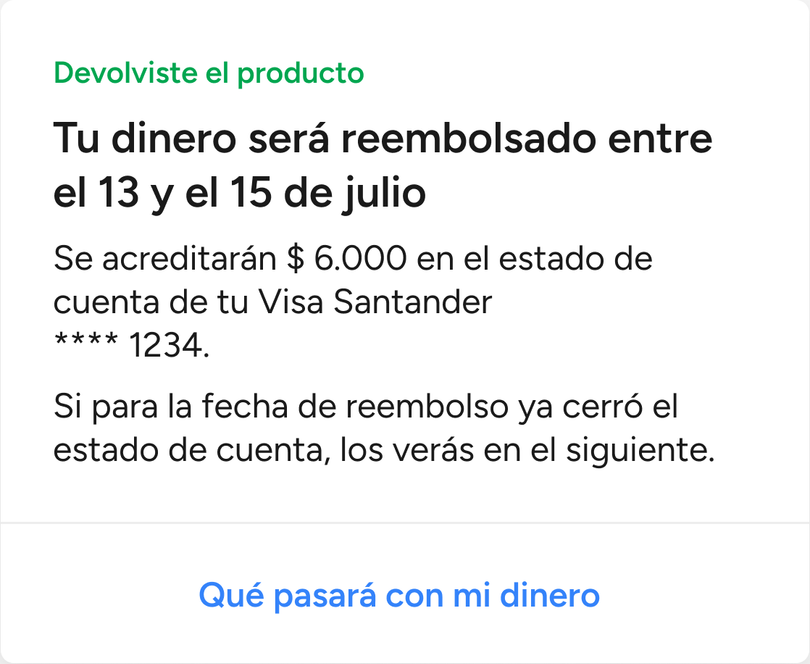
Credited
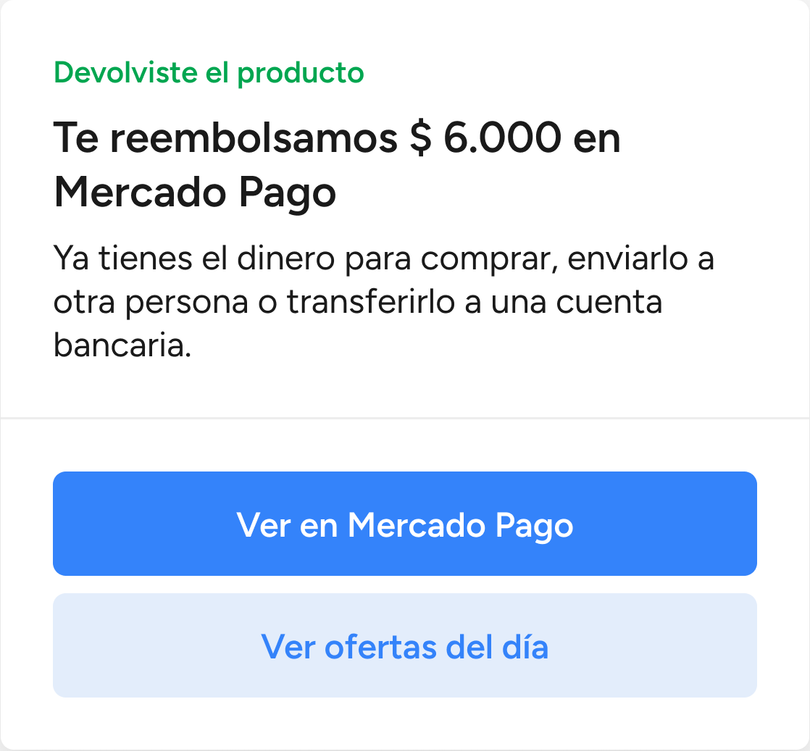
These are examples with different payment methods, not stages of the same purchase.
04 · Systematization
Design and content built from modules
The structure brings together a container, a header, and payment method modules that repeat depending on the purchase. Its height responds to the number of modules and the length of the content.
Modularity also organizes the messages: the payment method, the return path, and the refund status determine which amount, destination, condition, and help to show. The combinations follow rules; they are not arbitrary text swaps.
Design · A reusable structure
-
Base structure
HeaderDividerContentPayment method 1Payment method 2, if applicableThe container brings together the header, the divider, and the payment method modules.
-
Reusable unit
Image or iconDetails Amount or destination Condition or timeframe Help, optionalEach module combines the visual identification of the payment method with the details that apply to the scenario.
-
Scaling through repetition
One methodModuleTwo methodsModuleModuleN methodsModuleModuleModuleOne module is added for each payment method used, and the height adapts to the content.
N illustrates the repetition of the module; it does not represent an additional interface scenario.
Content · Messages driven by rules
-
What defines the scenario
- Payment method
- Return path
- Refund status
The transaction rules determine which information applies.
-
What information is combined
- Amount
- Destination
- Condition or timeframe
- Help, when needed
The blocks are combined according to the applicable rules.
-
How it is expressed in the card
Example of a destination with its crediting condition.
The content changes according to the refund condition
The variants make it possible to communicate different crediting conditions and add help when needed, while keeping the component's structure.
A different condition
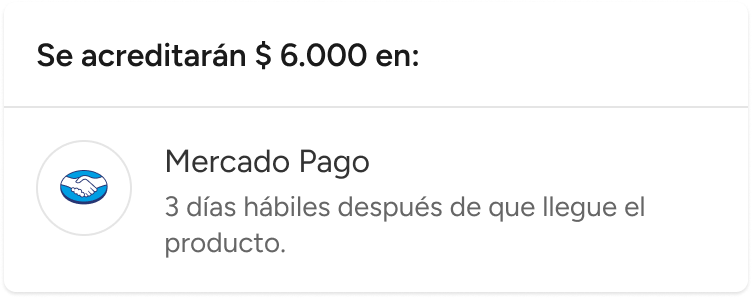
Help when needed
05 · Outcome
Implementation and scope of the change
The solution went into production as part of the redesign of Mercado Libre's returns and refunds flow. It added scenarios the previous experience did not cover and extended the information to the purchase view.
The system brings together a shared visual structure and messages that respond to the conditions of each transaction.